









Bra Sizes for Large Breasts: How to Find the Right Fit
Finding a bra that fits a full bust can be exhausting, with straps digging in, bands riding up, and cups overflowing. This guide will help you measure yourself accurately, understand key design features, and choose bras that provide both comfort and style every day.
Why Bra Size Matters More for Large Breasts
Support Starts With the Right Band
A bra band provides roughly eighty percent of its total support. If the band is too loose, it rides up your back, forcing the shoulder straps to carry the weight and dig into your skin. A snug, level band distributes weight evenly across your torso, protecting your neck and back from strain.
Cup Size Affects Comfort and Shape
Properly fitted cups encapsulate and lift your breast tissue while preventing uncomfortable skin-on-skin friction underneath. Cups that are too small compress the tissue and cause spilling, while oversized cups wrinkle, gap, and fail to provide any real lift.
Large Breasts Need Both Fit and Structure
Full busts require structural engineering rather than flimsy fabrics. Look for design elements like multi-part cups, reinforced side panels, and sturdy underwires. This built-in structure keeps your breasts centered, lifted, and secure throughout the day to minimize bounce.
Understanding Bra Sizes for Large Breasts
How Band Size and Cup Size Work Together
Bra sizing is a system of ratios. Your band size measures your ribcage, while the cup size represents the inch difference between your ribs and the fullest part of your bust. Because cup volume is relative to the band, a 34G holds significantly less volume than a 38G.
Cup Letters Explained (DD Through K and Beyond)
Past a D cup, each consecutive letter typically represents an additional inch of difference between your underbust and full bust. Do not let letters like G, H, or K intimidate you. They are incredibly common and simply indicate a specific physical proportion.
Sister Sizes and Why They Matter
Sister sizes share the exact same cup volume despite having different band numbers and cup letters. The rule is simple: if you drop down one band size, you must go up one cup size to maintain the same volume. For example, if a 36DD is too loose in the band, your correct sister size is a 34DDD.
US, UK, and EU Size Conversions
Bra sizing is not universal. US brands typically use single letters or multiple Ds, whereas UK brands are highly regarded for consistent full-bust scaling and use double letters like FF and GG. Always check where a brand is based before choosing your size.
|
US Size |
UK Size |
EU Size |
|
DD / E |
DD |
E |
|
DDD / F |
E |
F |
|
G |
F |
G |
|
H |
FF |
H |
|
I |
G |
I |
How to Measure Your Bra Size at Home
What You Need Before Measuring a Full Bust
To get an accurate reading, you need a flexible fabric measuring tape, a mirror to ensure the tape is straight, and a well-fitting, unlined bra. Avoid sports bras or heavily padded push-up bras because they will distort your natural measurements and lead to an incorrect result.

Step 1: Measure Your Underbust While Keeping the Tape Level
Wrap the measuring tape directly under your breasts, right where your bra band normally sits. Pull the tape snug but not uncomfortably tight, and look in the mirror to make sure it is perfectly parallel to the ground all the way around your body. Write down this number in inches.
Step 2: Measure the Fullest Part of Your Bust Without Compressing Breast Tissue
Wrap the tape around the fullest part of your chest, usually across the nipples. Keep the tape loose enough that it does not indent or squeeze your breast tissue. If your breasts are naturally pendulous or soft, bend forward at a ninety-degree angle so your tissue hangs naturally, ensuring you capture the full volume.
Step 3: Adjust for Shape, Projection, and Asymmetry
Standard measurements assume your breasts are perfectly round and symmetrical, but real bodies are rarely built that way. If one breast is larger than the other, always size your bra to fit the larger side. You can easily use a small insert or tighten the strap on the smaller side to balance it out.
Step 4: Use the Result as a Starting Size, Not a Final Answer
Treat your calculated size as a helpful baseline rather than an absolute rule. Different fabrics, brands, and styles will fit differently. You might be a 34G in one brand and a 36FF in another, so always be prepared to try a size up or down when testing a new bra.
Large-Bust Measuring Mistakes That Can Lead to the Wrong Size
The single biggest mistake is the outdated "+4 rule," where you add four inches to your rib measurement to find your band size. This historical method results in a band that is far too loose and cups that are too small. Other mistakes include measuring over bulky clothing or letting the tape measure sag across your back.
Best Bra Styles for Large Breasts
Full Cup Bras for Everyday Support
Full cup bras offer the most coverage and security. The fabric extends over the entire breast, preventing any top-spilling and providing a secure, held-in feeling that lasts all day long. They are excellent for daily wear under structured shirts or sweaters.
Balconette Bras for Shape and Lift
If you want a lower neckline without sacrificing support, a balconette bra is an exceptional choice. The straps are set wider apart and the cups cut straight across, lifting the breasts from the bottom to create a beautiful, rounded shape without excessive cleavage.
Sports Bras for High Impact Activity
Large busts require specialized compression or encapsulation sports bras to prevent painful bouncing during workouts. Look for styles with wide, padded straps, a thick under-bust band, and separate cups that hold each breast individually rather than smashing them together.
T-shirt Bras for a Smooth Look
T-shirt bras feature molded, seamless cups that disappear entirely under thin or tight fabrics. They provide a perfectly smooth, rounded silhouette without any visible seams showing through your clothes, making them an essential staple for casual wardrobes.
Strapless and Nursing Options
Finding a supportive strapless bra for a full bust requires wide silicone gripper strips along the band and strong side boning. For nursing mothers, specialized full-bust nursing bras offer easy-open clips combined with reinforced inner slings to keep everything lifted during feedings.
What to Look for in a Bra for Large Breasts
A Firm Supportive Band
Look for a wide band made of high-quality power-mesh fabric that stretches but snaps back firmly. It should sit flat against your back without bowing upward or digging into your skin.
Wider Adjustable Straps
Thin, spaghetti-style straps will cut painfully into your shoulders under the weight of a full bust. Opt for wider, padded straps that help distribute pressure evenly across your shoulders.
Deeper Cups
Ensure the cups have enough depth to fully enclose your breast tissue from the front to the underarm area. Seamed cups with multi-part construction often provide much better depth than molded cups.
Strong Side Support
Look for bras with an extra vertical panel of fabric on the outer edge of the cup. This side support pushes the breast tissue forward and inward, keeping your bust from spilling toward your armpits.
Multiple Hook Closures

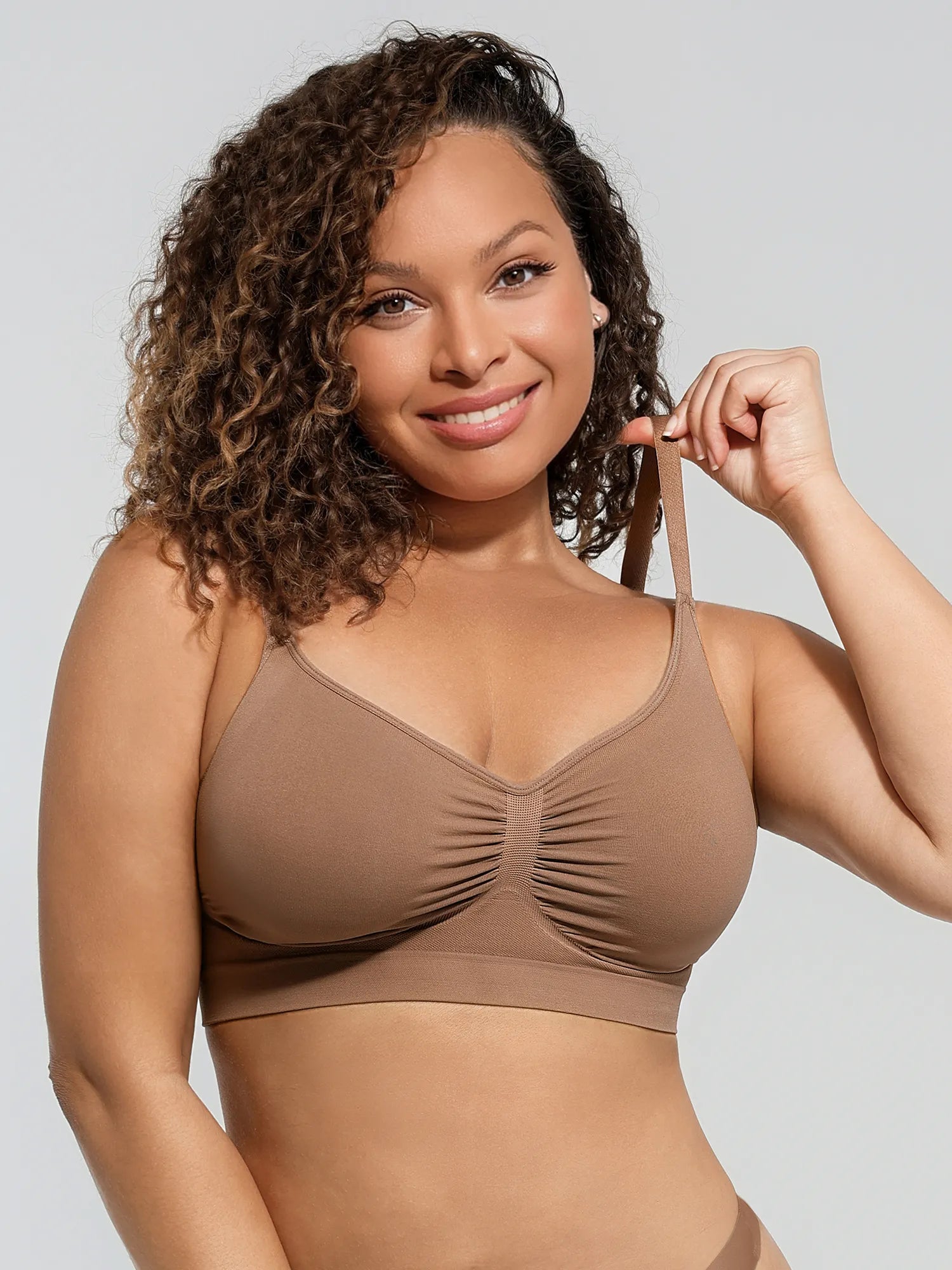
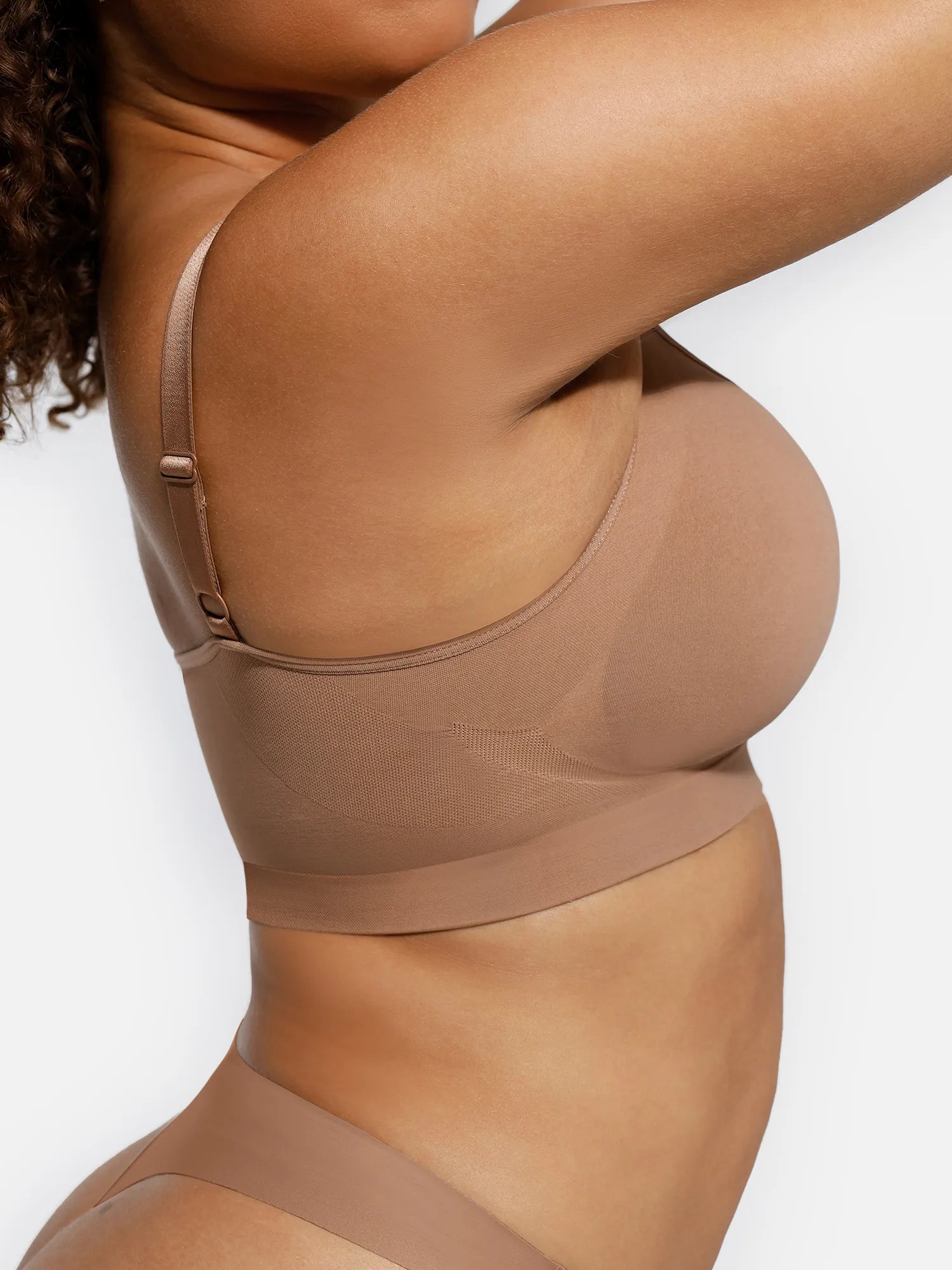
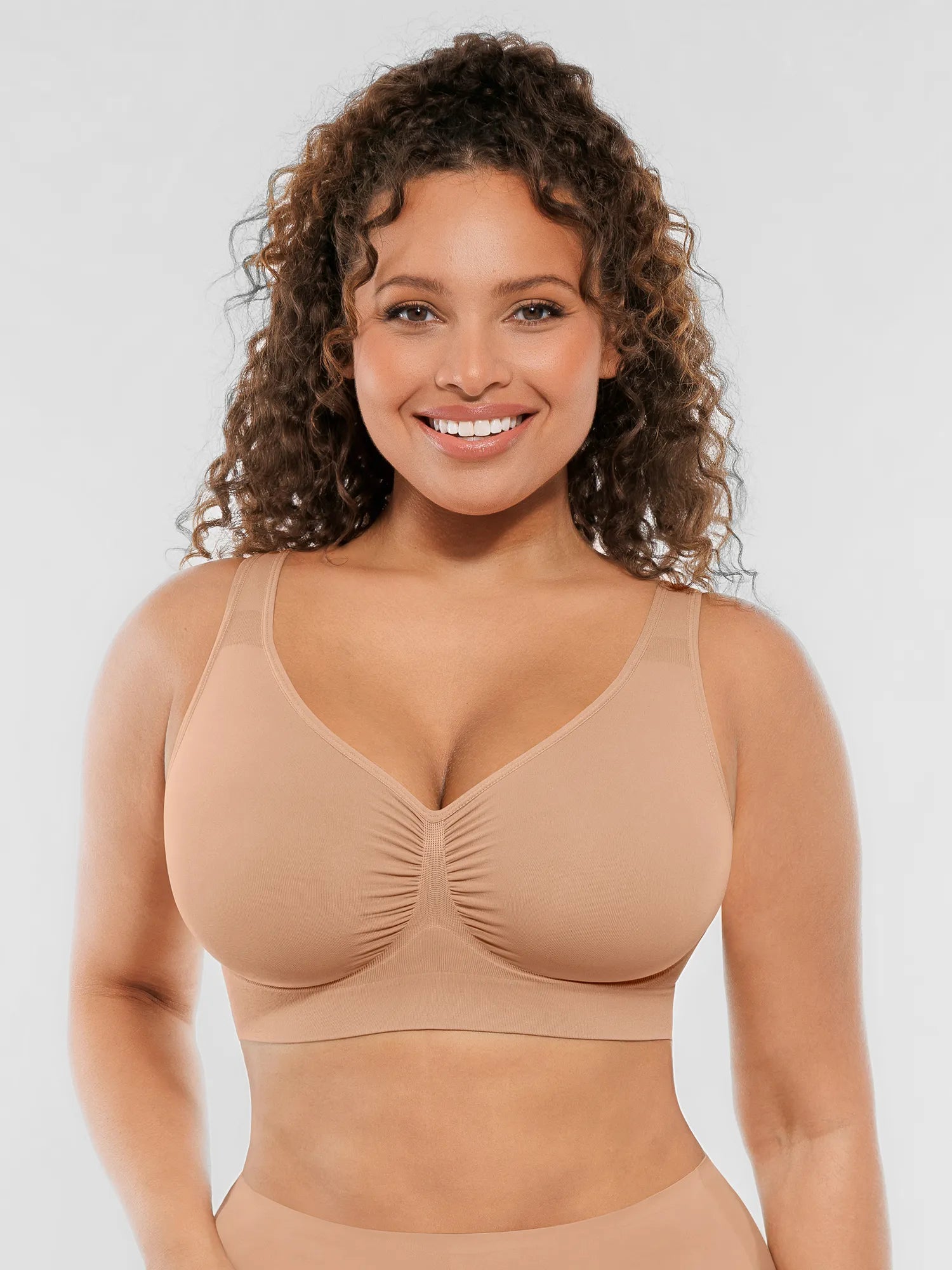
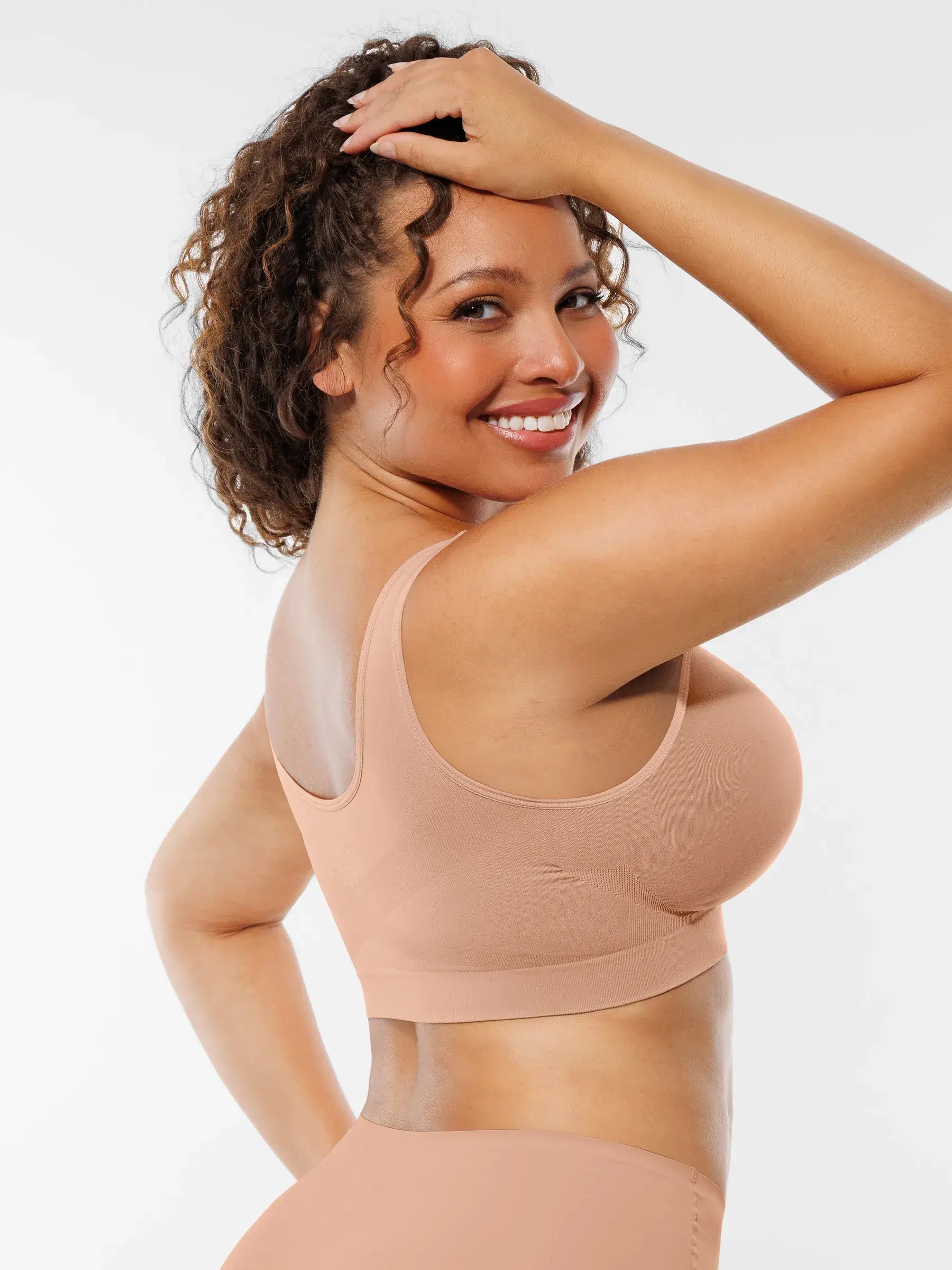
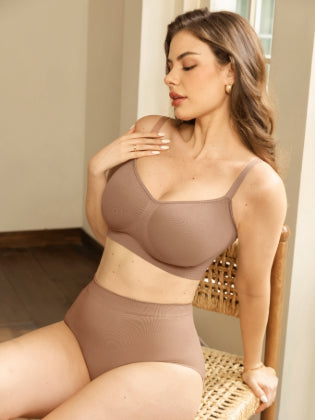
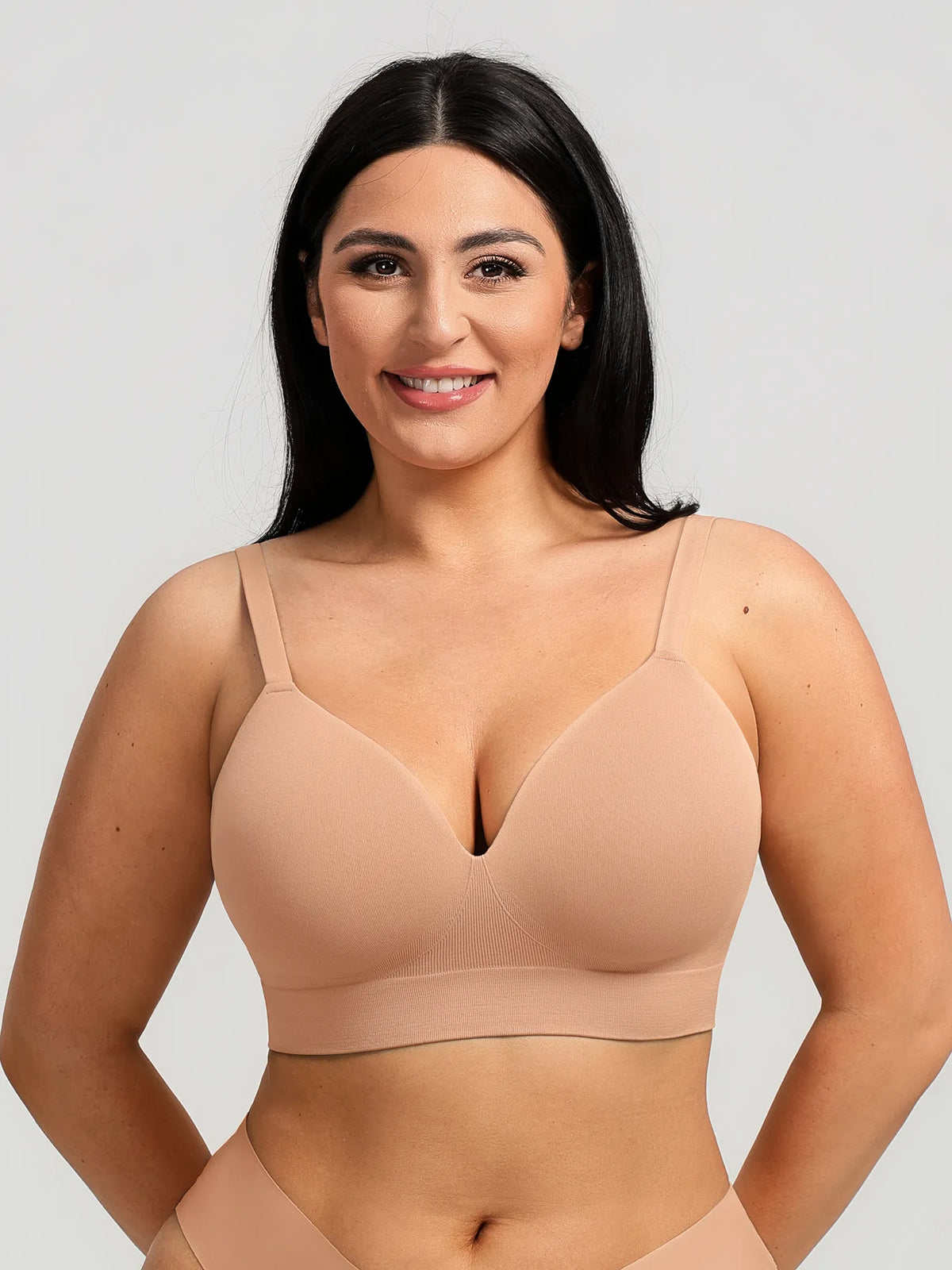
Single or double hook closures cannot handle the tension of a large bust. Look for bands with three to five rows of hooks to maximize stability and prevent rolling. Finding a wireless bra that actually supports a full bust without causing sagging, uniboob, or band roll-up is a major pain point for heavily endowed women. The FeelinGirl Seamless Ribbed Wireless T-Shirt Bra solves this by eliminating painful underwires while maintaining maximum lift and separation. Its wide, reinforced elastic under-band works alongside a robust multi-hook closure to securely anchor heavy breast tissue and distribute weight evenly without digging.
How to Check If Your Bra Fits Correctly
Check the Band
The band should be level all the way around your body. If it angles up toward your shoulder blades, it is too big. You should only be able to pull the band about an inch away from your spine when it is fastened.
Check the Cups
Your breasts should sit completely inside the cups. Look out for wrinkling or gaping fabric, which means the cups are too big, or bulging over the top and sides, which means they are too small.
Check the Center Gore
The center gore is the flat piece of fabric between the cups. It should rest flat against your breastbone. If it floats or lifts off your skin, the cups are likely too small or the style is wrong for your shape.
Check the Straps
The straps should stay in place without sliding off your shoulders or digging into your skin. You should comfortably fit two fingers under the strap at the top of your shoulder.
Move Around Before Deciding
Do not just look in the mirror. Bend over, twist from side to side, wave your arms in the air, and sit down. Perform a quick swoop and scoop by reaching into the cups to pull your breast tissue forward from the underarms. If everything stays comfortably in place, you have found a winner.
Final Thoughts
Finding the perfect bra for a large bust is not an overnight task, but it is an investment that completely changes how your clothes fit and how your body feels. By focusing on band support, structural details, and accurate measurements, you can say goodbye to discomfort and hello to everyday confidence.
Frequently Asked Questions
What Bra Size Is Considered Large?
Generally, any size starting at a D cup or DD cup and above is considered part of the full-bust category, as these sizes require more specialized engineering and structural support than smaller cup sizes.
Does Bra Size Change with Age?
Yes, bra sizes change frequently throughout life due to hormonal fluctuations, pregnancy, weight changes, and the natural loss of skin elasticity over time.
Which Cup Is Bigger, DD or DDD?
A DDD cup is larger than a DD cup. In American sizing systems, a DDD cup is exactly one size larger than a DD cup and is typically equivalent to a UK E cup.
How Often Should I Measure My Bra Size?
You should measure your bra size at least once a year, or whenever you experience significant lifestyle changes like weight loss, weight gain, or pregnancy.